
PCOD / PCOS (Polycystic Ovarian Disease / Syndrome)
Modern cataract or lens replacement surgery is one of most successful surgeries known. It is effective in restoring vision to most patients. The surgeon makes a tiny incision on the side of the cornea, removes the eye’s clouded natural lens after dissolving it (using a procedure known as Phacoemulsification) and then replaces it with an artificial ‘Intraocular Lens’ (IOL). Because the incision is very small, stitches are not required and the eye heals quickly, allowing the patient to return to routine lifestyle within a week. Modern cataract surgery is a safe outpatient procedure that barely takes about 10 minutes. Newer advancements such as whitestar phaco (cold phaco) and microincisional phaco emulsification (MICS) have increased its safety even further.
What Is An IOL?
An Intraocular Lens (IOL) is the replacement lens that is surgically implanted in the eye to replace the existing natural clouded lens during cataract surgery.
Types Of IOL
The design of IOL decides your need for spectacles after the surgery. Newer advanced IOL (Toric, Multifical and Accomodative) can treat cataract and get rid of spectacle power too.
Monofocal IOL
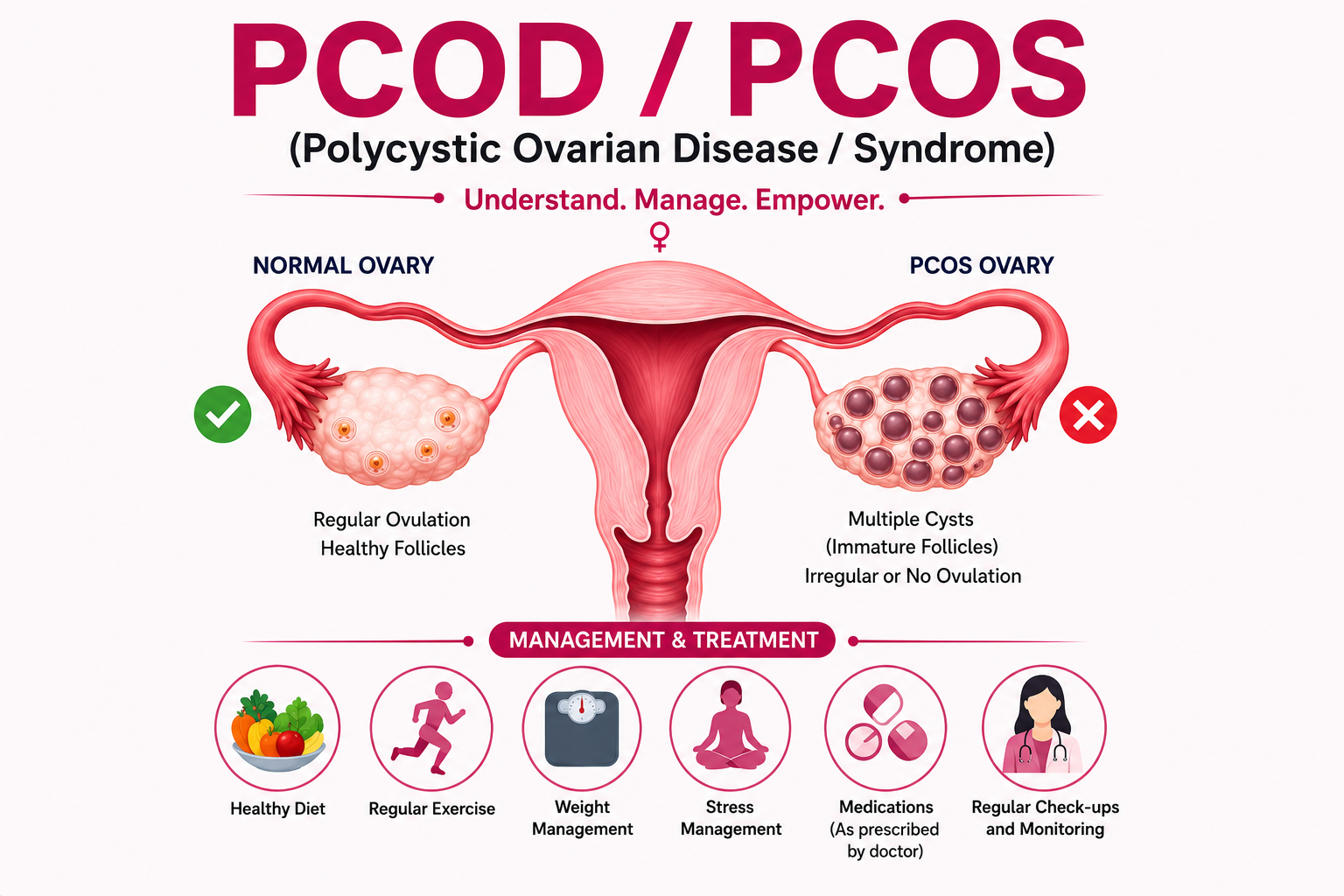
PCOS can also increase the risk of diabetes, high blood pressure, and other metabolic disorders if left untreated.
Treatment depends on the individual’s symptoms and reproductive goals and may include:
Lifestyle modifications (healthy diet, exercise, and weight management)
Medications to regulate periods and hormones
Fertility treatments for women trying to conceive
With early diagnosis and proper management, most women with PCOD/PCOS can lead healthy lives and successfully achieve pregnancy when desired.
Our Experts Doctor

Dr Shweta Upadhyaya
Gynaeologist & IVF Specialist